
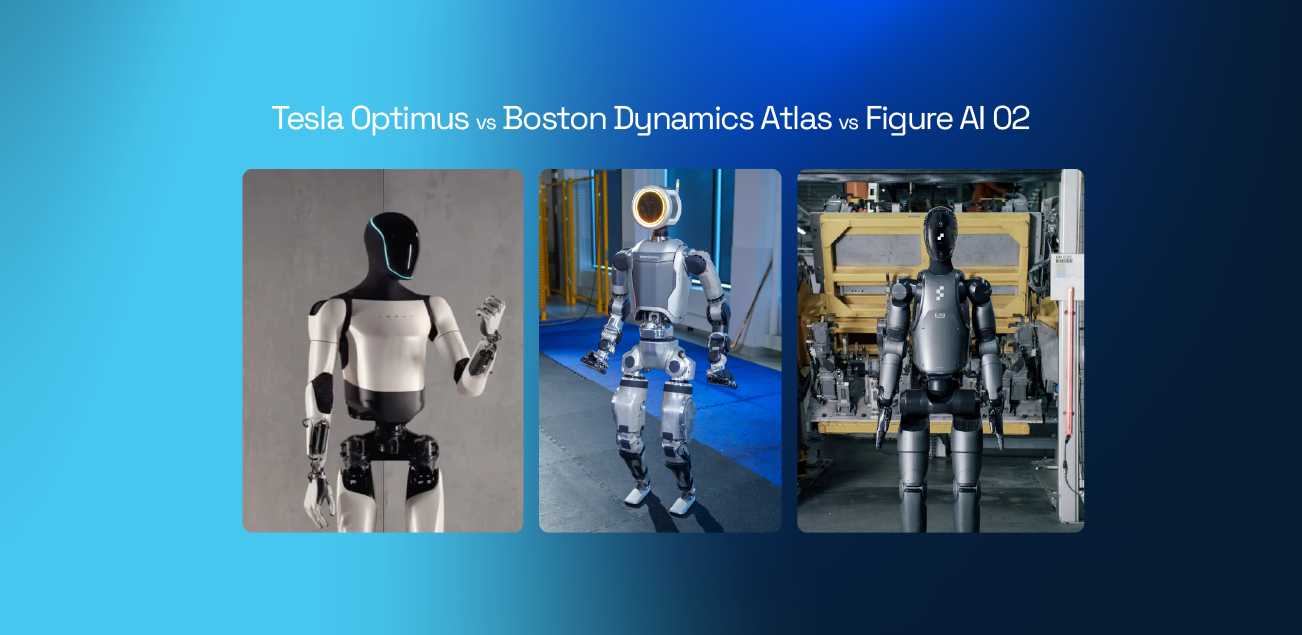
In 2023, the average price of a commercially available humanoid robot was approximately $85,000. By the end of 2025, that figure had fallen to around $25,000. Unitree, the Chinese robotics company, shipped over 5,500 humanoid robots in 2025 alone — surpassing the combined output of all US competitors including Tesla, Figure AI, and Agility Robotics — and is targeting 20,000 units in 2026.
This is not a gradual decline. It is a compression that follows a familiar pattern: once a technology crosses from prototype to manufacturable product, volume drives cost reduction faster than most market observers predict. The humanoid robot market is crossing that threshold now.
Three dynamics are compressing the cost curve simultaneously.
The first is manufacturing scale. Unitree's ability to hit 60% gross margins at $25,000 price points while shipping thousands of units annually means the cost of production has been driven down through volume, supply chain optimization, and component standardization. This is the same dynamic that brought electric vehicle battery costs from $1,000 per kilowatt-hour in 2010 to under $100 today. The first company to reach scale sets the price floor for everyone else.
The second is simulation-driven training. The most expensive part of developing a commercially deployable robot used to be real-world testing: putting hardware in physical environments and collecting data until the AI system was reliable enough to ship. Simulation infrastructure changes that equation entirely. NVIDIA Isaac Sim, GR00T N foundation models, and GPU-accelerated reinforcement learning allow companies to generate training data synthetically at a fraction of the cost of physical collection. This is why Figure AI can ramp from one robot per day to one per hour without proportionally increasing its engineering headcount: the AI training pipeline is not bottlenecked by physical hardware availability.
The third is component commoditization. Actuators, sensors, processors, and battery systems that were custom and expensive in 2022 are increasingly standardized and available from multiple suppliers. Qualcomm launched the Dragonwing IQ10, a humanoid-specific processor, in 2026. Infineon, NXP, and STMicroelectronics have all formalized humanoid-specific product integrations. When specialized components become catalog parts, margins compress and prices follow.
Tesla has stated a target manufacturing cost of $20,000 per Optimus unit at scale. Elon Musk has suggested a consumer price below $25,000 once volume production is established. Morgan Stanley and Goldman Sachs have both published estimates placing humanoid robot shipments at 1 to 2 million units annually by 2030, with prices continuing to fall as volume increases.
At the current trajectory, a commercially available general-purpose humanoid robot priced below $15,000 by 2030 is not an optimistic scenario. It is what the cost curve suggests if manufacturing scale continues to track with stated production targets.
The falling price curve creates a genuine timing question for operators evaluating automation investments. Waiting for cheaper hardware seems rational. But the operators who wait are not just deferring cost — they are deferring the operational learning, the deployment infrastructure, and the process refinement that compounds over time.
The companies that will operate humanoid robot fleets efficiently in 2028 and 2029 are not the ones that buy hardware in 2028. They are the ones building the deployment methodology, the digital twin infrastructure, and the simulation-to-physical pipeline now. Hardware gets cheaper. Operational knowledge does not appear automatically when hardware prices drop. It is accumulated through deployment experience.
The price compression in humanoid robotics is an argument for moving faster on infrastructure, not slower. The robots will be affordable. The operators who have built the capability to absorb and operate them efficiently will have a structural advantage over those who waited for the price to be right.
Every serious robotics company that has achieved production scale in 2025 and 2026 has built on simulation-first methodology. Figure AI, Tesla Optimus, Agility Robotics, and the leading Chinese manufacturers all use simulation infrastructure to train and validate robot behavior before hardware deployment. The cost curve falling on the hardware side does not reduce the importance of the training infrastructure. If anything, it increases it: cheaper hardware means more robots to train and deploy, which means more demand for the simulation pipelines that make deployment reliable.
The window for building that infrastructure, before humanoid hardware reaches general commercial availability, is open right now.