
In early May 2026, the last Tesla Model S rolled off the Fremont production line. Fourteen years of production ended quietly. What replaced it is not a new car. It is the beginning of what Elon Musk calls the most important product Tesla has ever built.
By late July or August 2026, that same factory floor will begin producing Optimus Gen 3 humanoid robots. Tesla has converted an automotive assembly line that produced over 610,000 vehicles into the world's first large-scale humanoid robot manufacturing facility. The Fremont conversion is not a press release. It is a physical, irreversible bet on humanoid robotics at a scale no company has attempted before.
I want to talk about what this actually means. Not for Tesla's stock price. For the industry.
Optimus Gen 3 is a meaningfully different robot from what Tesla has demonstrated publicly. It has 37 joints, nine more than Gen 2. The hand system has 50 actuators, producing a 4.5x increase in dexterous capability from the previous generation. Walking speed reaches 1.2 meters per second with stable operation on 15-degree slopes. The robot is powered by Tesla's AI5 inference chip, the same processor being deployed to Tesla's Cortex 2.0 supercomputer cluster, delivering approximately 5x the compute of AI4.
What this means practically: the Gen 3 hands can perform assembly tasks, not just pick and place. The AI5 chip runs the robot's perception and decision systems at a compute level that closes the gap between controlled demonstration and unstructured real-world operation.
Tesla is not building a demonstration robot. It is building a manufacturing robot. That distinction matters for understanding what this conversion actually signals.
Here is the part of this story most coverage misses. The Fremont conversion is not primarily a manufacturing story. It is a sim-to-real story.
Every one of the 10,000 unique parts in Optimus Gen 3 has to be trained into the robot's behavior model. Every manipulation task, every surface type, every lighting condition, every edge case the robot will encounter on a real production floor has to be either demonstrated in the real world or synthesized in simulation. At the scale Tesla is targeting, real-world data collection is not sufficient. The physics-accurate simulation pipeline is what makes the production timeline possible at all.
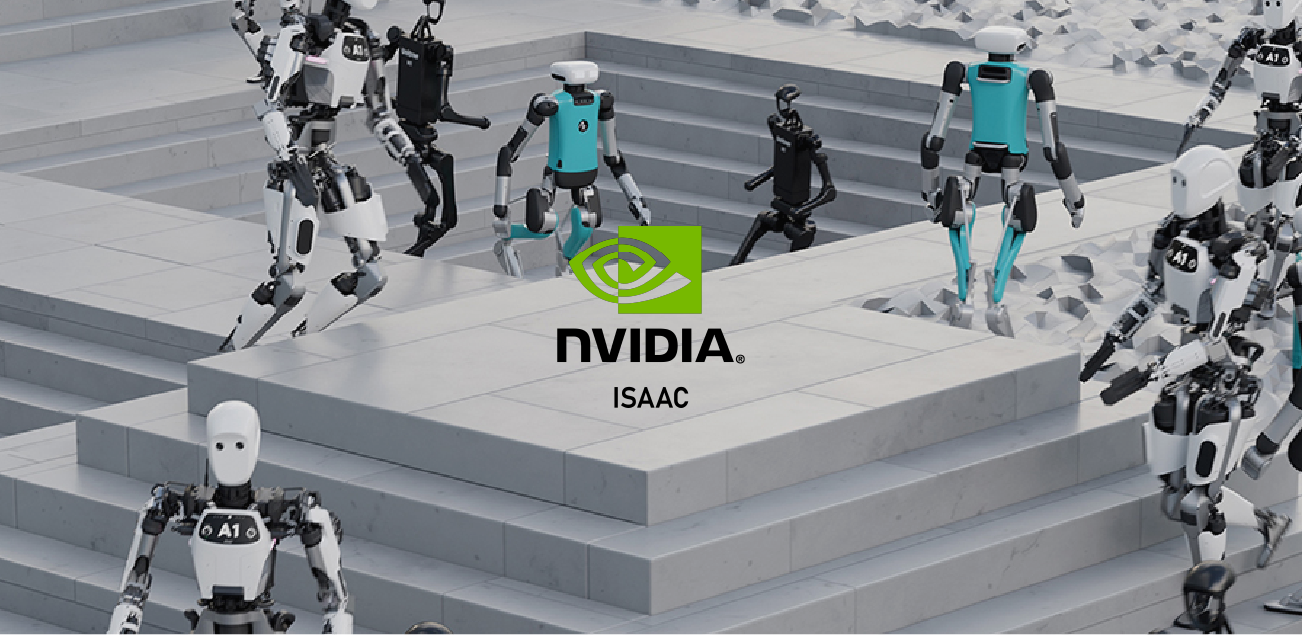
This is why NVIDIA's announcement of Isaac Sim 6.0 and the GR00T N1.7 commercial release in April 2026 matters in the context of this story. The tools for generating synthetic training data at the scale Tesla needs have matured in lockstep with Tesla's production timeline. That is not a coincidence. It reflects where the industry's infrastructure investment has been concentrated.
At Helpforce AI, we run this same simulation-first pipeline for warehouse and security robot deployments. When we build a digital twin of a client facility and run the robot through thousands of scenarios before hardware arrives, we are using the same methodology Tesla is depending on to train Optimus for the Fremont floor. The scale is different. The methodology is identical.
There is a version of this story that reads as pure triumphalism. That is not the honest read. In the Q1 2026 earnings call, Musk said it is literally impossible to predict the production rate this year. He acknowledged that initial output will be quite slow given the complexity of the production line. He pushed the Gen 3 reveal to late July or August, citing competitive secrecy as the reason. He said competitors analyze every demo frame by frame and copy everything they can.
This is a more measured Musk than the one who predicted 10,000 units in 2025. Zero Optimus robots were doing useful work in Tesla factories by January 2026, by his own admission. The 2025 production target was missed entirely.
The honest timeline: production starts in late 2026, meaningful volume in 2027, scale in 2028 and beyond. The Fremont conversion is real. The 10-million-unit Giga Texas target is a long-term design capacity, not a near-term forecast.
The gap between where Tesla is and where the marketing says it is does not diminish what is happening. A major automotive manufacturer has permanently converted a flagship production line to humanoid robot manufacturing. That decision cannot be undone. It reflects a calculation that the humanoid robot market will reach sufficient volume to justify retiring a profitable, established automotive line.
The industrial operators, engineers, and deployment companies paying attention to this should be drawing two conclusions. First: the hardware is coming, and the timeline has compressed from a decade to a few years. Second: the methodology required to deploy this hardware effectively, the simulation infrastructure, the digital twin pipeline, the sim-to-real transfer capability, is available now and the gap between having it and not having it is compounding every month.
You can read more about Tesla's full factory strategy and production capacity targets and how the simulation tools underpinning this deployment pipeline compare in our earlier coverage.
The Fremont conversion is the clearest signal yet that humanoid robotics has crossed from research to industry. The question for every operator and engineer in this space is not whether to prepare. It is how far behind they are willing to fall before they do.